
We Keep Calling It Progress
What it reveals about absence, attention and who gets to be seen

Every few months, something resurfaces, a study, a diagram, a “new” understanding and we react like we’ve moved forward.
Seatbelts weren’t designed for women’s bodies. Menopause is finally being taken seriously. Postpartum depression is being recognised. And most recently, we got a complete anatomical diagram of the clitoris, in March 2026.
And we called that progress.
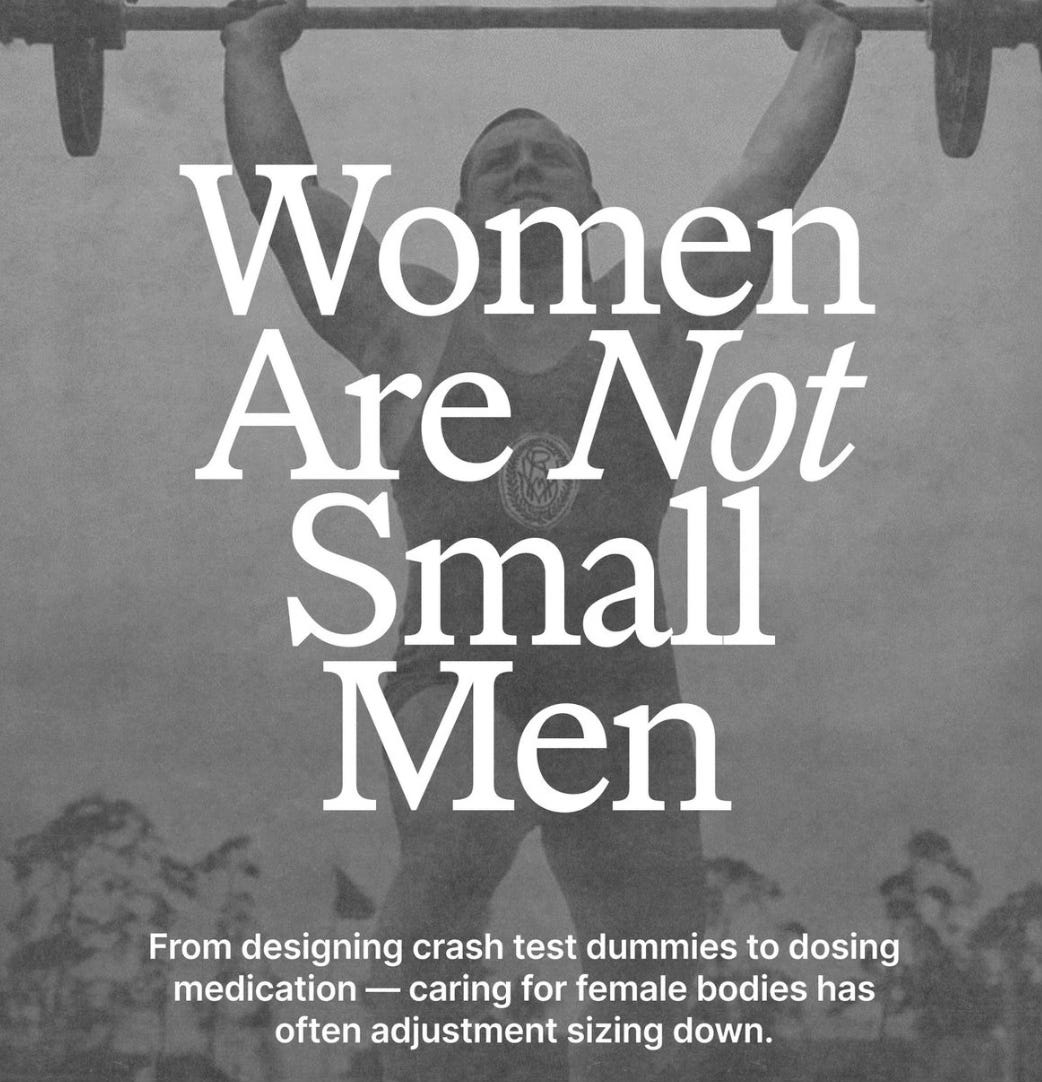
Because what else do you call it when something finally exists?
But the more I sit with it, the less it feels like advancement. What it reveals is not how far we’ve come, but how long something can be missing without anyone treating it like a loss.
We say women’s issues are “understudied,” but that phrasing is too soft. It suggests oversight, as if half the population being overlooked was accidental, as if it just happened. It didn’t.
Absence like this is structural. Not confined to one field or one mistake, but embedded across medicine, research, policy and design, in the very systems that decide what is worth knowing and therefore, what is worth caring about.
And yet, every time a woman points to that gap, says this is incomplete, this is wrong, this is harming us, she has to push. She has to insist. She has to become what people call too much. Because quiet has never been enough to be taken seriously.
And still, we want to believe people care. We want to believe in the comfort of “not all men,” in systems that eventually correct themselves, in awareness as a form of progress.
But if awareness were enough, we wouldn’t still be discovering our own bodies in 2026.
There is something else that makes this harder to ignore.
Women are not a minority and yet we live like one, not because we are fewer, but because we are separated. Taught to experience the same systems privately, to process them individually, to negotiate them quietly. What is collective in design becomes personal in experience.
That fragmentation is not accidental. A unified voice is difficult to ignore. So instead, you build a world where women are constantly adjusting, adapting, explaining, softening. You let them feel their anger, but never fully trust it.
The more uncomfortable part is this: even when you begin to see it, you don’t step outside of it.
Because patriarchy is not just something external. It is institutional, yes, but it is also internalised. It exists in the language we use, the choices that feel natural, the instincts we rarely question. It shapes not just the world we live in, but the way we move through it.
I’ve been trying to unlearn for years and I still catch myself thinking in ways that don’t feel like mine. That’s how deep it goes.
Unlearning is not a concept. It is a disruption. It changes how you hear things, how you read things, how you sit in rooms you once felt comfortable in. It makes you notice what others move past. And once you notice it, you don’t get to go back.
This is where people get uncomfortable. Because noticing has consequences.
It makes you difficult. It makes you exhausting. It makes people avoid certain conversations with you, sometimes even people you love.
My sister looks at me sometimes like I’ve taken it too far. Like I’ve made everything political, everything structural, everything about patriarchy.
And maybe I have.
But what do you do when the same pattern keeps repeating itself? In marriage, in religion, in culture, in the smallest, most ordinary behaviours. At what point does it stop being overanalysis and start being recognition?
Because here’s the truth we don’t say out loud enough: not everything we’ve been taught to believe in was built for our freedom. Some of it was built for stability, for order, for containment.
And still, I understand why people hold on to it. Faith keeps people functioning. Hope makes things bearable. Belief gives structure to uncertainty. Not everyone can afford to let that go. Maybe not even me, entirely.
But at the very least, we need to start asking better questions.
Not just: why is this happening?
But: who benefits from this staying this way?
Because if it still takes a woman raising her voice for the world to register her reality, then the problem was never a lack of information.
It was a lack of willingness to see.
And that is not something awareness fixes.